
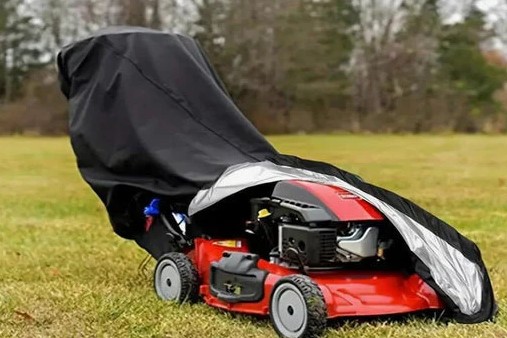
Source:https://us.mammotion.com
The sky turns a bruised shade of purple, the wind picks up, and suddenly, a torrential downpour begins. Most homeowners rush to grab the patio cushions, but they leave their $400—or $4,000—investment sitting exposed in the corner of the yard or a leaky shed. I’ve seen it hundreds of times: a high-end zero-turn mower reduced to a rusted, sputtering paperweight because of “micro-corrosion.”
In my ten years in the home improvement trenches, I’ve realized that the difference between a tool that lasts thirty years and one that dies in five isn’t just the brand—it’s the storage. People underestimate the slow, silent damage of UV rays, morning dew, and nesting rodents. A high-quality lawn mower cover isn’t just a piece of fabric; it’s an insurance policy for your garage’s most expensive tenant.
The Silent Killers of Outdoor Machinery
When you leave a mower uncovered, you aren’t just letting it get “a little dirty.” You are inviting a chemical and mechanical assault on its vitals. Throughout my career, I’ve performed “autopsies” on dozens of mowers that “just wouldn’t start,” only to find the same culprits.
UV Degradation and Plastic Fatigue
Think of the sun as a slow-motion fire. Constant exposure to UV radiation breaks down the chemical bonds in plastic fuel tanks, spark plug wires, and control levers. I’ve seen vibrant red mowers turn a chalky pink, their plastic components becoming so brittle they snap like crackers under the slightest pressure.
The Condensation Trap
This is the “insider secret” most people miss. Even if your mower is under a roofed porch, temperature fluctuations create condensation inside the engine’s air intake and fuel system. Moisture is the enemy of combustion. A breathable lawn mower cover acts like a high-tech rain jacket—it keeps the liquid out while allowing internal moisture to “sweat” away.
Anatomy of a Professional Lawn Mower Cover
Not all covers are created equal. If you buy a cheap, tarp-like plastic cover from a discount bin, you might actually be doing more harm than good by trapping heat and moisture against the metal. Here is what I look for when I’m auditing a client’s equipment setup.
Material Density (The Denier Count)
In the world of textiles, we talk about Denier (D). This measures the thickness of the fibers.
-
300D: Lightweight, okay for indoor dust protection in a sealed garage.
-
600D and above: The gold standard. This is heavy-duty marine-grade polyester that can withstand heavy snow and high winds.
Essential Technical Features
-
PU (Polyurethane) Coating: This is a layer applied to the inside of the fabric to ensure it is hydrophobic (water-repelling).
-
Taped Seams: Just like a professional tent, the seams where the fabric is sewn are the weakest points. Look for “heat-sealed” or “taped” seams to prevent water from seeping through the needle holes.
-
Elasticized Hems and Drawstrings: In a windstorm, a loose cover becomes a sail. I’ve seen mowers tipped over because a loose cover caught a gust of wind. You want a snug fit that hugs the wheels.
Why Every Mower Needs a Shield: From Push to Riding
Whether you have a compact electric mower or a heavy riding tractor, the logic of protection remains the same.
For the Modern Electric Mower
Electric mowers are essentially computers on wheels. They have circuit boards, lithium-ion battery ports, and sensitive wiring. While they are designed to be robust, they are far less “forgiving” of moisture than old-fashioned gas engines. Using a lawn mower cover for an electric model is non-negotiable if you want to avoid expensive electrical shorts.
For the Gas-Powered Workhorse
For gas mowers, the cover protects the fuel cap and air filter. If water gets into the fuel tank through a vented cap, your engine will stall, and you’ll be looking at a $100 carburetor cleaning bill. I like to think of the cover as the mower’s “immune system”—it keeps the external pathogens (dirt, water, and debris) away from the vital organs.
Choosing the Right Size: The “Tailored Suit” Analogy
You wouldn’t wear a tuxedo that is three sizes too big, and you shouldn’t do that to your mower. An oversized cover will sag, creating “pools” of water that eventually leak through.
-
Small/Medium: Typically fits standard walk-behind or “push” mowers.
-
Large/XL: Designed for riding mowers and small lawn tractors.
-
Zero-Turn Specific: These have a unique “boxy” shape to accommodate the high seat and control arms.
Measurement Tip: Always measure from the tip of the front deck to the rear of the bagger. If your mower has a side-discharge chute, make sure the width measurement includes that protruding piece!
Pro Advice: Maximizing Your Mower’s Life
Tips Pro: The “Cool Down” Rule
Never throw a heavy-duty cover over a mower the second you finish cutting the grass. The engine and exhaust can reach temperatures over 200°F. If you cover it immediately, you risk melting the PU coating of the cover or, worse, creating a fire hazard. Give it 20 minutes to “breathe” before tucking it in.
Rodent Real Estate
In the winter, a covered mower is a luxury hotel for field mice. They love to chew on the spark plug wires and nesting in the engine shroud. My expert trick: Tucked a few dryer sheets or a small bag of mothballs under the cover near the engine deck. The scent drives rodents away without damaging the machine.
The ROI of Proper Storage
Let’s look at the numbers. A high-quality lawn mower cover costs between $25 and $60. A mid-range mower costs $400. If that cover extends the life of your mower from 6 years to 12 years (which is very common with proper care), you are effectively saving yourself $66 per year in depreciation costs.
Beyond the money, there is the “aggravation factor.” There is nothing worse than waking up on a Saturday morning ready to tackle the yard, only to find your mower won’t start because the electronics got damp overnight. Consistency is the key to a great lawn, and a protected mower is a reliable mower.
Conclusion: Don’t Let Your Investment Rust Away
In my decade of home improvement, I’ve learned that the most successful homeowners aren’t the ones with the most expensive tools—they are the ones who take care of the tools they have. Transitioning from a “disposable” mindset to an “asset protection” mindset starts with small steps.
Investing in a lawn mower cover is a clear signal that you value your equipment and your time. It’s the difference between a frustrating morning of mechanical troubleshooting and a satisfying afternoon of perfectly manicured grass.
What’s your current storage setup like? Is your mower tucked away safely, or is it battling the elements as we speak? Drop a comment below if you have questions about specific materials or sizing—I’ve seen almost every brand under the sun and I’m happy to help you find the right fit!