Source:https://murphydoor.com
Imagine stepping into your master suite after a grueling business trip. You open the doors to your dressing area, only to be greeted by a chaotic avalanche of mismatched hangers, dark corners where expensive tailored suits go missing, and a complete lack of breathing room. Instead of a calming sanctuary, your high-end space feels like a cluttered stockroom.
Over my 10+ years of remodeling luxury homes, I have noticed a fascinating shift in what buyers actually care about. High-end countertops and smart toilets are great, but a poorly engineered dressing space can completely sink a luxury property’s appraisal and emotional appeal.
I once consulted on a multi-million dollar estate that sat on the market for nine months. The culprit? A massive, yet completely unoptimized master wardrobe area that looked like a cavernous, empty drywall box. We stepped in, re-engineered the spatial layout, and turned it into an architectural masterpiece. The home sold three weeks later.
A premium walk in closet is no longer just a place to hide your clothes. It is an experiential asset, a personal boutique, and a high-yield investment in your property’s equity. Let’s peel back the layers on how to design this space with true professional precision.
Architectural Ergonomics: The Golden Ratios of Closet Design
When beginners approach closet design, they often make the mistake of focusing purely on aesthetics—like choosing wood finishes or decorative hardware. True luxury, however, is born from ergonomics. If the physical measurements are wrong, the space will never feel premium.
The Standard Clearance Blueprint
Think of your custom wardrobe layout like a high-traffic highway. You need designated lanes to ensure smooth transit and zero bottlenecks.
-
The Single-Sided Walkway: If you have cabinetry on one wall only, your walkway must be a minimum of 36 inches wide to allow an adult to move freely.
-
The Double-Sided Island Layout: If you plan to incorporate a center island, you need at least 36 to 40 inches of clearance on all sides between the island and the perimeter cabinets to comfortably open drawers and cabinet doors.
-
Depth Precision: Standard hanging clothes require a minimum depth of 24 inches. Anything shallower means your expensive jackets and blazers will constantly scrape against the back walls or get pinned by closing doors.
Spatial Flow Metaphor
Designing a high-performance walk in closet is exactly like configuring a high-end kitchen work triangle. You need a logical, fluid transition from the “raw storage” zone (hanging rods and deep shelves) to the “processing” zone (drawers and jewelry trays) to the “final inspection” zone (full-length mirrors and vanity lighting).
Smart Zoning: Mastering Long-Hang, Short-Hang, and Open Shelving
An amateur layout treats every square foot of wall space equally. A veteran designer analyzes your specific wardrobe inventory before drawing a single line on a blueprint.
[Top Level: 12-15" Depth]  ---> Seasonal Storage / Luggage
[Mid Level: 24" Depth]     ---> Double Hanging Rods (Shirts / Pants)
[Lower Level: 14" Depth]   ---> Angled Shoe Displays with LED Strips
1. The Power of Double Hanging
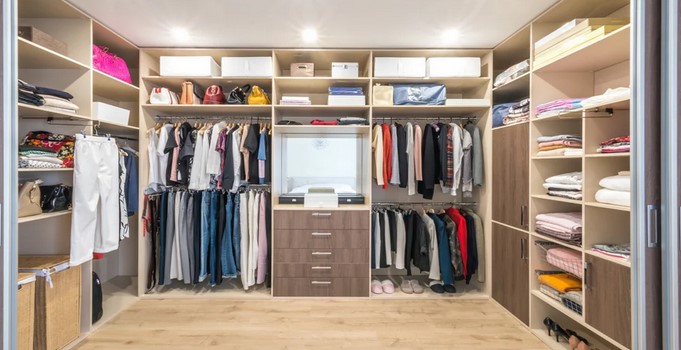
Most of your wardrobe consists of shorter items like button-down shirts, folded trousers, and skirts. By installing double-hanging rods—one at 40 inches from the floor and the second at 80 inches—you instantly double your usable vertical storage real estate.
2. Dedicated Long-Hang Allocations
Never skip the long-hang section. Maxi dresses, trench coats, and evening gowns need a clean drop of 60 to 65 inches to prevent the fabric from bunching up on the baseboards.
3. Open Shelving vs. Glass-Front Cabinets
Open shelving is perfect for chunky knits, sweaters, and designer handbags because it makes your daily choices highly visible. However, for a truly elevated look, integrate glass-front cabinet doors with soft-close hinges for your absolute highest-value items. It gives the space that upscale, curated boutique vibe while keeping dust completely at bay.
💡 Pro Tip: The Integrated Valet Rod
Always incorporate at least two retractable valet rods into your cabinetry trim. These hidden metal rods slide out seamlessly when needed. They are the ultimate operational tool for planning your outfits the night before, staging dry cleaning, or packing for an upcoming trip.
Illuminating the Wardrobe: Technical Lighting Design
You can buy the most expensive white oak cabinetry in the world, but if your color temperature is wrong, your navy suits will look black and your cream dresses will look washed-out yellow.
Mastering the Color Rendering Index (CRI)
In luxury home improvement, we never use cheap, standard light bulbs in dressing areas. You must look for LED fixtures with a CRI of 90 or higher. A high CRI ensures that the artificial light mimics natural sunlight accurately, allowing you to see the true, vibrant colors of your textiles.
The Three Layers of Light
To eliminate all shadows and make your walk in closet glow like a luxury showroom, you must install three separate layers of light:
-
Ambient Lighting: A central flush-mount fixture or an elegant chandelier that sets the overall mood and aesthetic tone of the room.
-
Task Lighting: Dedicated recessed spotlights focused directly over the mirrors, vanities, or island packing zones.
-
Accent/Intrabox Lighting: Hidden LED tape lights (ideally 3000K to 3500K temperature) routed into the vertical side panels of your shelving. This illuminates your shoes and clothing from the front rather than the top down, casting zero unwanted shadows.
The Structural Overlooks That Ruin Custom Closets
Before you kick off your luxury build or renovation, you must account for these hidden technical dangers that often catch intermediates completely off guard.
-
HVAC and Air Stagnation: Closets are packed tight with organic materials like wool, leather, and cotton. Without proper air circulation, these spaces become breeding grounds for musty odors and humidity. Always ensure your HVAC system includes a dedicated supply vent and return air path within the room.
-
The Weight-Bearing Trap: Modular DIY closet organizers are often anchored solely into drywall using plastic anchors. A single foot of tightly packed hanging clothes can easily weigh up to 30 pounds. True luxury cabinetry must be mechanically fastened directly into the structural wood wall studs or onto a heavy-duty steel suspension rail system.
-
Window Fading: Natural light looks beautiful, but direct UV rays will mercilessly fade and discolor expensive fabrics over time. If your dressing space has a window, apply a high-grade UV-blocking architectural window film or install automated blackout shades.
Conclusion: Crafting Your Personal Sanctuary
Transforming a simple storage space into a high-impact, luxury walk in closet requires a deliberate marriage of structural engineering, spatial ergonomics, and premium lighting design. When executed correctly, it does more than just organize your daily life—it acts as a powerful selling point that dramatically boosts your home’s market value.
Are you preparing to design a custom dressing suite from scratch, or are you looking to optimize an existing layout that just isn’t performing well? Leave a comment below detailing your current spatial dimensions, and let’s architect the perfect custom layout for your home!