
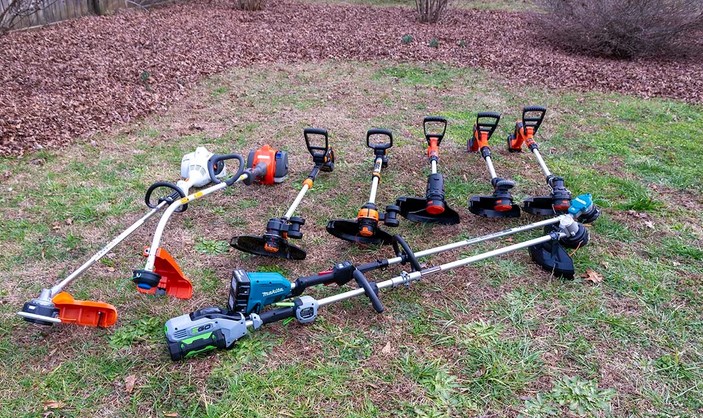
Source:https://www.bobvila.com
Nothing ruins a productive Saturday afternoon in the yard faster than spending more time bumping, re-threading, and untangling your trimmer head than actually cutting grass. We have all been there: you step up to trim along a brick wall or chain-link fence, and within thirty seconds, your line snaps off flush inside the spool hub.
Early in my career managing property maintenance, I used to think snapping line was just an inevitable cost of doing business. I kept pockets stuffed with pre-cut line segments and wasted hours every month replacing brittle plastic.
It took years of hands-on testing to realize that line breakage isn’t bad luck—it is a chemical and mechanical failure. Mastering the longevity of your string trimmer line comes down to polymer science, proper diameter selection, and physical technique along hard perimeters.
Polymer Mechanics: Why String Trimmer Line Degrades
To understand why a string trimmer line snaps or welds together inside the bump head, think of the nylon material like a leather belt. When leather is fresh, oiled, and hydrated, it bends smoothly without cracking under tension.
When that same belt sits in a hot garage for two years, it loses its moisture, turns brittle, and snaps under the slightest strain. Most commercial trimmer lines are manufactured from extruded monofilament nylon polymers (specifically Nylon 6 or Nylon 6,6).
Nylon is a hygroscopic material, meaning it continuously absorbs and releases moisture from its surrounding environment. When spool line dries out during winter storage or in high garage heat, its impact resistance drops drastically, turning a flexible cutting tool into brittle spaghetti.
Matching Gauge and Profile to the Perimeter Task
One of the biggest mistakes beginners make is buying whatever spool is on sale without considering line cross-section geometry or engine displacement. Matching your line profile to the task dramatically reduces line consumption and engine strain.
| Line Gauge (Diameter) | Typical Power Source | Ideal Cutting Application | Durability Rating |
| 0.065″ – 0.070″ | Low-voltage Cordless / Electric | Light grass, small flower beds | Low (Prone to snapping on hard edges) |
| 0.080″ | 20V–40V Cordless / Small Gas | Residential lawns, fence lines | Moderate (Best all-around DIY standard) |
| 0.095″ | 30cc+ Gas / 60V Commercial | Heavy weeds, thick stems, chain-link | High (Standard pro-sumer choice) |
| 0.105″ – 0.130″ | 40cc+ Heavy Gas / Straight Shaft | Overgrown brush, commercial perimeters | Maximum (High impact resistance) |
Cross-Sectional Profiles: Round vs. Multi-Sided vs. Twisted
-
Round Profile: The classic standard. It offers maximum surface area durability and tears less easily against rough concrete, but it tends to drag against air resistance, lowering engine RPMs.
-
Square / Multi-Sided (Star): Features sharp cutting edges that slice cleanly through thick weed stalks like a knife rather than tearing them like a whip. However, those sharp corners wear down faster against brick structures.
-
Twisted / Spiral Profile: The professional choice for noise reduction and battery efficiency. The aerodynamic twist cuts through air resistance, reducing engine drag and vibration while maintaining excellent perimeter strength.
The Physics of Edge Trimming: Preventing Line Welding
When operating at 7,000 to 10,000 RPM, the tips of your string trimmer line reach linear speeds exceeding 150 miles per hour. At those speeds, hitting a hard obstacle like a concrete foundation creates immense kinetic heat.
If you crowd the work surface by jamming the full cutting head against a brick wall, two destructive phenomena occur:
-
Line Impact Fatigue: The rapid back-and-forth bending at the eyelet exceeds the polymer’s tensile yield point, causing the line to shear off right at the head exit.
-
Spool Fusion (Line Welding): Excessive friction and heat transfer back down the line into the spool housing, melting adjacent nylon coils together into a solid plastic lump.
WRONG: Crowding the Work (High Heat & Line Shear)
[ Concrete Wall ] <== [ Trimmer Head ]  <-- Full line buried; leads to line welding.

CORRECT: Tip-Cutting Technique (Maximum Speed & Low Wear)
[ Concrete Wall ] <. . . . . . . [ Trimmer Head ]  <-- Only outer 1/2 inch makes contact!
Expert Advice: Pro Tips and Hidden Warnings from a 10-Year Pro
Over a decade of field experience yields techniques you won’t find on a product box label. Here are critical insights to maximize line lifespan:
Pro Tip: The Water Hydration Bucket TrickBefore winding old or stiff line onto your spool, submerge the entire plastic spool of string trimmer line in a bucket of fresh water for 24 to 48 hours. The nylon will absorb water molecules into its polymer matrix, restoring up to 80% of its original impact flexibility and making it significantly less prone to snapping.
-
Hidden Warning #1: The Eyelet Wear GrooveCheck the metal eyelets where the line exits your trimmer head housing. Over time, abrasive dust cuts sharp grooves into those metal rings. These razor-sharp edges will slice your fresh line instantly as soon as you bump the head under load. Replace worn eyelets immediately.
-
Hidden Warning #2: Directional Winding ErrorsWinding nylon line onto the inner spool in the wrong directional arrow orientation causes immediate internal crossing. When you bump the head to feed line, the overlapping coils lock tight, forcing you to stop work and disassemble the entire bump cap.
Maintenance Routine for Peak Trimming Efficiency
To maintain crisp turf borders without chewing through supplies, follow this quick perimeter maintenance protocol:
-
Select the Proper Tip Offset: Always trim using only the outer 0.5 to 1 inch of the line tips. This utilizes peak centrifugal velocity where cutting force is highest and heat generation is lowest.
-
Inspect Line Moisture: Store spools inside a sealed plastic bag with a wet paper towel during hot summer months to keep the nylon hydrated.
-
Balance Engine Throttle: Avoid holding your trimmer at wide-open throttle when working around delicate fence posts or vinyl siding. Feathering the trigger gives you fine control and extends line life.
Take Control of Your Property Edges
Achieving clean, razor-sharp lawn borders does not have to mean wrestling with snapped plastic every five minutes. By understanding polymer hydration, matching line profile to your yard’s needs, and letting the line tips do the slicing, you save money, reduce frustration, and protect your equipment.
What is your biggest headache when trimming around your property perimeter? Are you dealing with line welding, rapid line wear, or stubborn weed growth? Drop a comment below—I read and answer your questions to help you master your outdoor projects!